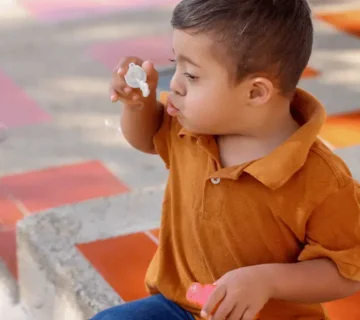

Play therapy gives children a way to say what they can’t put into words. The therapist uses play as the main channel, in a structured way that suits the child’s age and development. Play therapy for children is usually offered between ages 3 and 12, and it helps them express feelings, work through difficult experiences and ease behavioral or emotional struggles.
According to Dr. Sushant D. Sarang, who offers play therapy at Tender Touch Therapy Clinic,”Young children may find it difficult to express their emotions verbally, making play an important tool for understanding their feelings and behaviour. Through activities such as role-playing with dolls or building and knocking down blocks, children may communicate underlying emotions, experiences, and concerns. By carefully observing these interactions, therapists can gain valuable insights into a child’s emotional state and identify areas that may require therapeutic support.”
How Does Play Therapy Actually Work?
To a parent it can look like an hour of games. There’s a plan underneath.
Observation first: Before the therapist changes anything, they just watch. A few minutes of free play shows how a child moves, how long they focus, whether they take turns, and what mood they’re in. No test pressure either.
Play as the language: A child may not be able to explain a fear. They’ll still act it out, with a doll, a block tower, a pretend scene. The therapist picks up on those themes and answers within the game, calmly.
Goals behind every game: Nothing is random. A board game may target turn taking, while an obstacle course builds body control and confidence. Looks like fun. Works like therapy.
Parents stay in the loop: Regular updates and simple home strategies keep progress going after the session ends.
Our play therapy sessions follow this same structure, adjusted to each child’s age and needs.
Which Children Can Benefit From Play Therapy?
Child’s Concern | What Parents May Notice | How Play Helps |
Emotional struggles | Clinginess, constant worry, mood swings | Feelings come out through pretend play, no words needed |
Behavioral challenges | Meltdowns, defiance, trouble with rules | Self control and turn taking get practised inside games |
Developmental differences | Delayed milestones, little play with peers | Communication and social skills build step by step |
Sensory or attention difficulties | Avoids messy play, can’t stay with one activity | Graded sensory and focus activities that feel like play |
Mostly children between 3 and 12, though the reason for referral varies a lot.Emotional struggles: A child who won’t talk about it isn’t hiding anything on purpose. Often the words just aren’t there yet, so play becomes another route.
Behavioral challenges: Outbursts usually carry a message. So therapy goes after the cause first. Coping skills come next, taught in small steps without pressure.
Developmental differences: Children with delays or autism often practise social skills in play before anywhere else. Waiting for a turn, for instance. Or sharing a toy. Ordinary things, hard to learn.
Sensory or attention difficulties: Some children won’t touch sand. Others can’t stay with one game past two minutes. Both are telling you something, a graded play helps children express what they can’t put into words.
See how this plays out for one group in our post on autism play therapy.
Why Choose Tender Touch Therapy Clinic for Play Therapy?
Dr. Sushant Sarang is a PhD Scholar in Occupational Therapy, with Sensory Integration certification, Level I and IV, from the USA. Over 27 years in practice and 2 lakh plus sessions guided, he has worked with children across a wide range of needs through play. Each child begins with an assessment done through play. What they do in the room shapes the plan, not a checklist. Sessions mix movement, building, pretend play and games with rules, all in a sensory rich space. Parents leave with simple things to try at home and updates about progress regularly.
Child goes quiet when asked, but acts it all out in play.Book an assessment to find out why.
FAQs
What age is play therapy for?
Usually between three and five, right when a child’s social world widens.
Does my child need to talk during play therapy?
No. It’s an anxiety disorder, and it can exist with or without autism.
Can parents be involved in play therapy?
Some kids improve on their own, but therapy speeds things up and prevents relapse.
How is play therapy different from regular playtime?
Depends on the child, but most parents see progress within a few months.
- PMC — An Overview of Play Therapy: https://pmc.ncbi.nlm.nih.gov/articles/PMC8812369/
- PMC — Play Therapy: https://pmc.ncbi.nlm.nih.gov/articles/PMC2695756/
Disclaimer: This blog is for informational purposes only and is not a substitute for professional medical advice.