
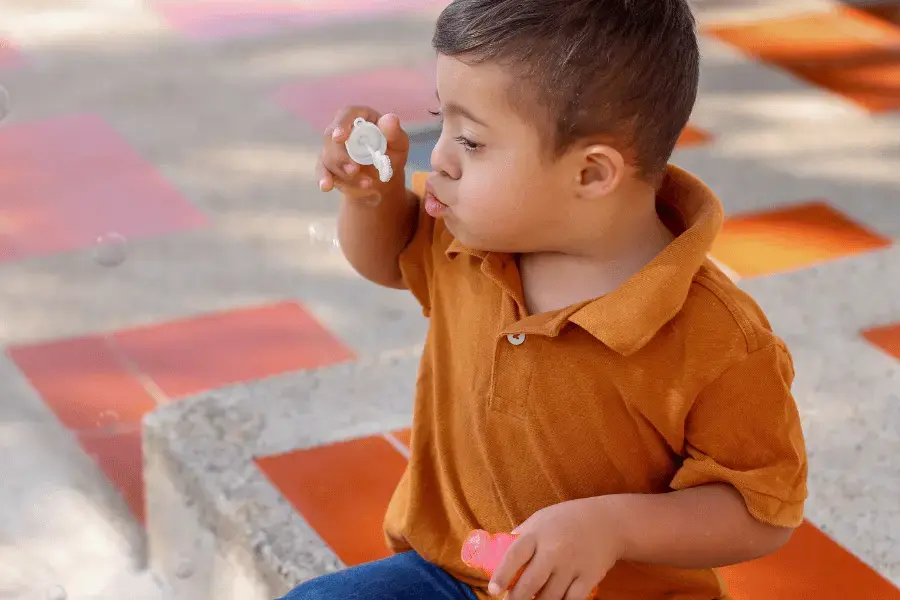
Every parent has that moment of comparing notes whose baby started walking first, who said their first word earliest, who’s already climbing the furniture. It’s natural to keep an eye on how your child is growing compared to others. But development isn’t a race, and most children reach the same milestones at slightly different times without anything being wrong.
That said, there’s a difference between “taking a bit longer” and a delay that’s worth looking into. Knowing what to watch for and when to actually raise it with someone can save parents a lot of unnecessary worry, or help them get support sooner if it’s needed.
“Development isn’t a race. Every child has their own pace, but noticing persistent difficulties early can help families get the right support when it matters.”— Dr. Sushant Sarang,
Developmental Milestones: What Should Parents Look For?
Developmental milestones are skills children usually develop as they grow, such as smiling at a caregiver, sitting without support, saying their first words or holding a crayon. Children may progress at different rates and can be ahead in one area while needing more time in another.
Parents and professionals generally look at five key areas:
- Motor skills – Crawling, walking, climbing, grasping and using objects
- Speech and language – Babbling, talking, understanding and following instructions
- Cognitive skills – Learning, remembering and solving simple problems
- Social and emotional skills – Responding to others, making eye contact and playing
- Self-help skills – Eating, dressing and using the toilet independently
Milestones are helpful guidelines, not strict deadlines. Being a little late with one skill doesn’t always mean something is wrong. What matters is whether the child continues to gain new skills or faces ongoing difficulties in one or more areas.
Signs of Developmental Delay in Children
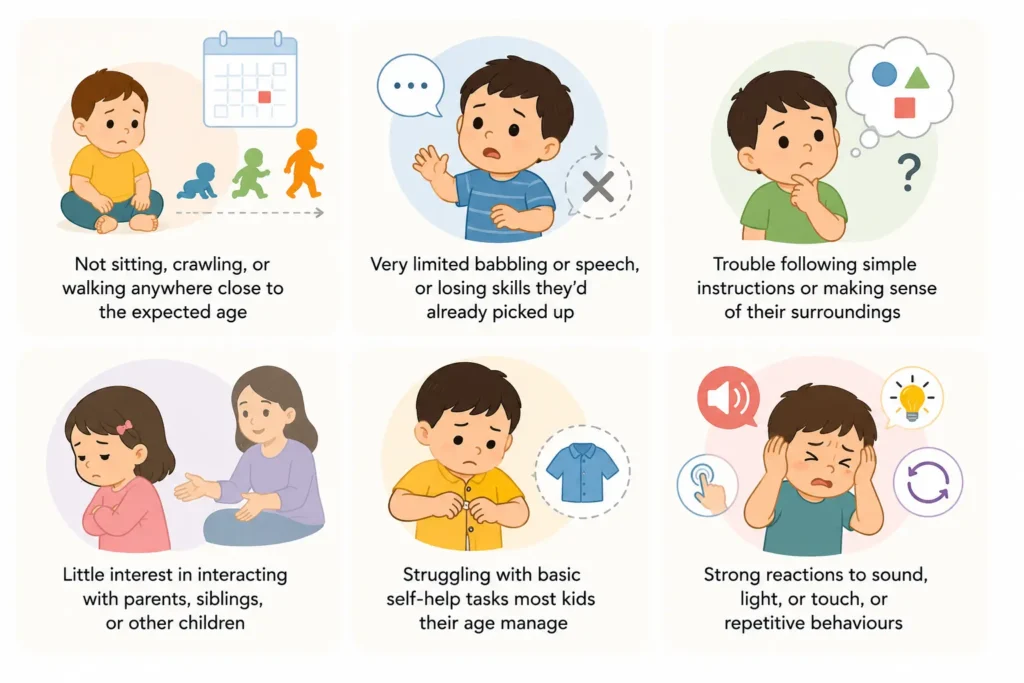
A single missed milestone rarely means much by itself. What tends to raise a flag is a child falling behind in more than one area, or a gap that sticks around for months instead of closing.
Some things worth watching for:
If a few of these sound familiar, it doesn’t mean there’s a diagnosis waiting. But it’s reason enough to talk to a paediatrician or developmental specialist rather than wait it out.
Concerned your child might be falling behind on their milestones? A professional developmental assessment can give you clarity and a clear next step.
Developmental Delay vs Developmental Disorder: What's the Difference?
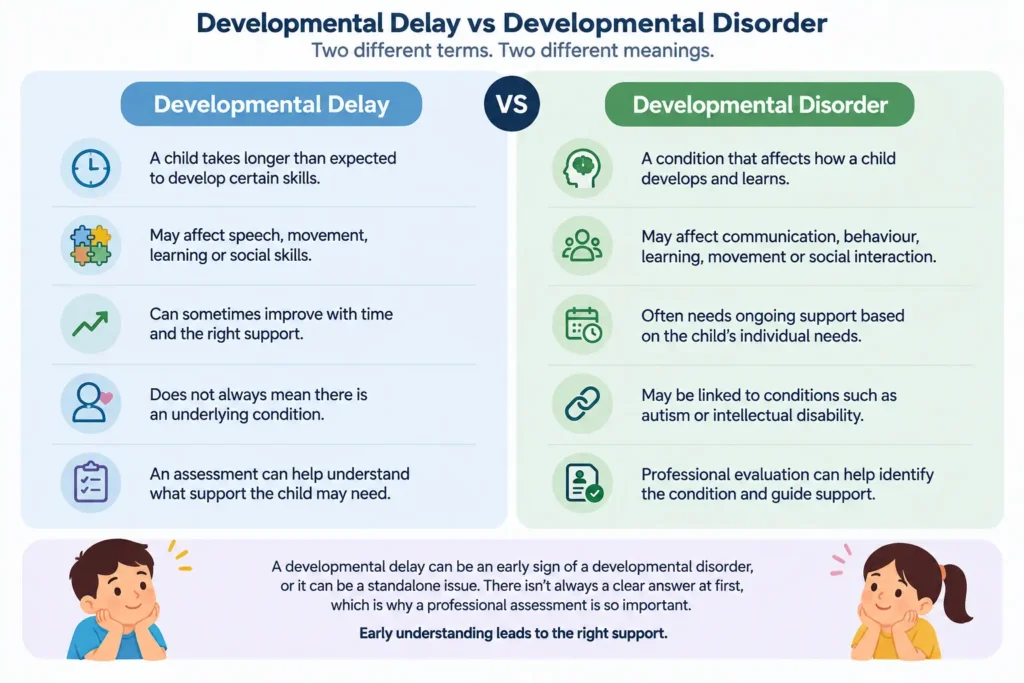
A developmental delay means a child takes longer than expected to develop certain skills or reach developmental milestones.
How Are Developmental Delays Assessed?
There isn’t one test that settles it. Assessment is usually a process, drawn from a few sources:
- Developmental screening – a paediatrician checks a child’s skills against expected milestones at routine visits, often with a short questionnaire
- Observation of play and behaviour – how a child moves, communicates, and interacts often says more than any single test
- Standardised developmental tests – specialists use these to compare a child’s skills against age norms more precisely
- Input from parents – what you’ve noticed at home genuinely matters, not just a box to tick
- Referral to specialists – depending on what turns up, this could mean a speech-language therapist, a psychologist, or an occupational therapist
How Occupational Therapy Can Help Children With Developmental Delays
When a delay does need support, occupational therapy is often a sensible place to start. Rather than zeroing in on a single skill, it looks at how a child is coping with day-to-day life as a whole.
An occupational therapist typically assesses:
- Motor coordination and body awareness
- Sensory processing and regulation
- Attention, focus, and self-control
- Play skills and social interaction
- Independence with everyday tasks like dressing, eating, or using the toilet
The therapist creates a plan based on the child’s needs and interests. Much of the work happens through play, helping children build coordination, focus and confidence in a fun, natural way.
Conclusion
Development is not a linear process and a slow beginning in one area does not necessarily indicate a problem. However, if a delay becomes noticeable in more than one skill, or if it does not resolve over time, then it’s time for a complete examination.
Early assessment is not a hurry to diagnose the process, it’s an understanding of what is happening and what help, if needed, would be useful. Most children make real progress and parents have a better understanding of what comes next with the right guidance.
Wondering if your child’s development needs a closer look? A developmental assessment can help you understand where they stand and what support could help.
FAQs
What counts as a developmental delay in a child?
It means a child is taking longer than most kids their age to reach certain skills movement, talking, thinking, social skills, or everyday tasks.
Is a developmental delay the same as a developmental disorder?
Not exactly. A delay can narrow or close with time. A disorder tends to be longer-lasting. One can sometimes lead to the other.
When should I get my child assessed?
If more than one area seems behind, or a single delay hasn’t budged in several months, it’s worth raising with a paediatrician.
How is a developmental delay diagnosed?
Usually through a mix of screening, watching how the child plays and behaves, some testing, and what parents have noticed at home.
Can occupational therapy help with developmental delays?
Yes. It works on movement, sensory response, focus, and independence, built around play to suit the child.
References
https://my.clevelandclinic.org/health/diseases/14814-developmental-delay-in-children
https://www.ncbi.nlm.nih.gov/books/NBK562231/
Disclaimer: This blog is for informational purposes only and is not a substitute for professional medical advice.