Toe walking in toddlers is common while a child is still building balance and coordination, so a phase of it isn’t automatically something to worry about. But when it sticks around past the toddler years, the causes of toe walking in children can range from plain habit to muscle tightness, sensory sensitivity or an underlying developmental factor worth a proper look.
According to Dr. Sushant D. Sarang, Occupational Therapist in Navi Mumbai at Tender Touch Therapy Clinic, “Parents get told to just wait it out, and sometimes that’s right. But past age three, or when it’s constant, it’s worth checking whether the ankle, the nervous system, or something else is behind it.”
What Are the Common Causes of Toe Walking in Children?
Not every child toe walks for the same reason, and the reason usually shapes what comes next.
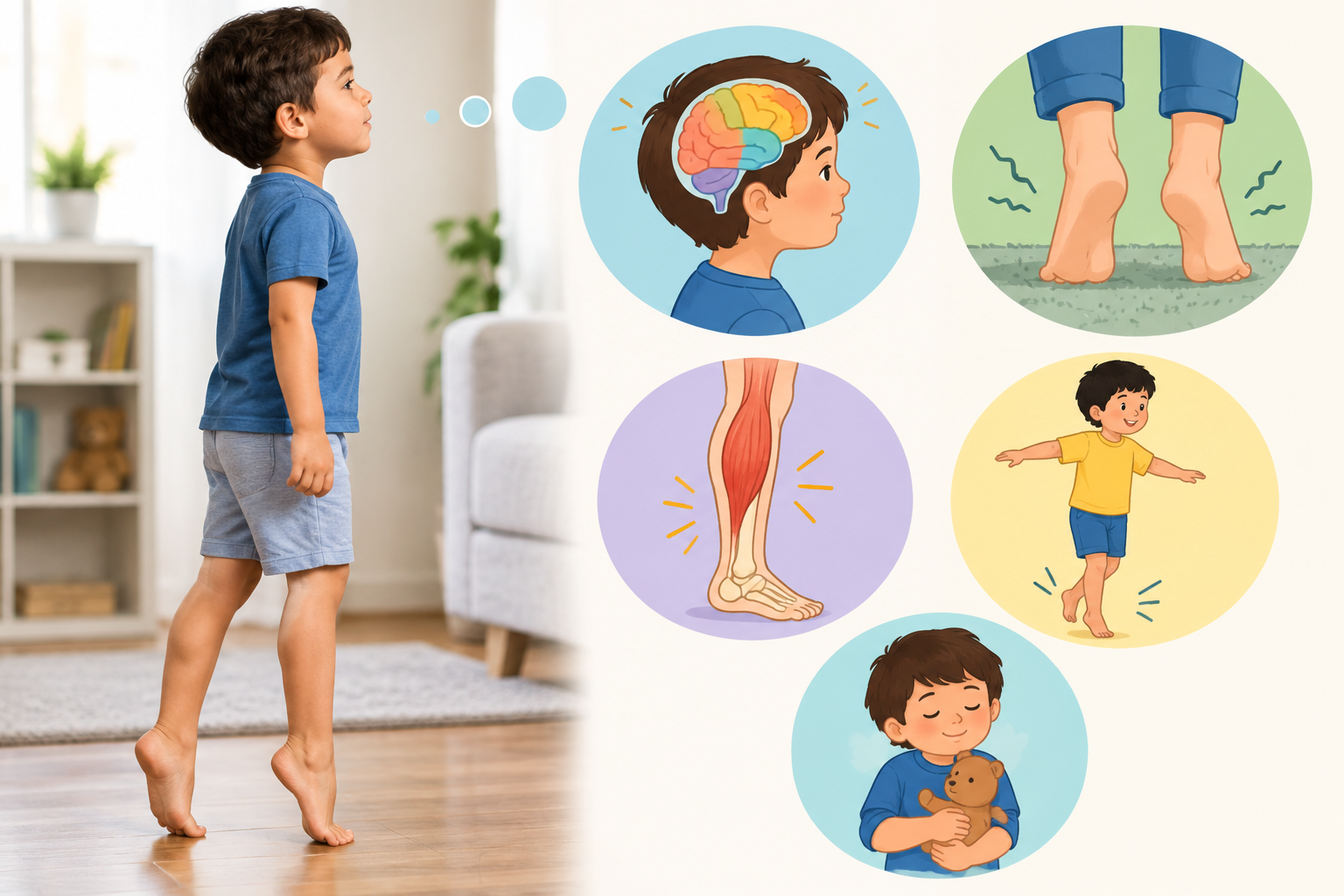
- Idiopathic toe walking: No clear cause, no other symptom, just a habit that stuck since the child’s first steps. Most common type by far.
- Sensory sensitivity: Some kids toe walk because the soles of their feet register touch or pressure differently, so full-foot contact feels overwhelming rather than steady.
- Tight calf muscles: A shortened Achilles tendon or tight calf muscles can make heel-down walking physically uncomfortable, not just unfamiliar.
- Underlying developmental conditions: Autism spectrum disorder, cerebral palsy and certain muscular conditions can all show up first as toe walking, long before anything else gets noticed.
A sensory integration therapy assessment can pinpoint which of these is actually driving the pattern.
How Is Toe Walking in Toddlers Different From a Lasting Problem?
A toddler on their toes isn’t automatically a red flag. Age and consistency change the picture completely.
Feature | Typical Toddler Toe Walking | Toe Walking That Needs Attention |
Age range | Under 2 to 2.5 years | Persists past age 3 |
Consistency | On and off, mixed with normal walking | Almost every step |
Ankle flexibility | Full range of motion | Tight, resistant to stretching |
Other developmental signs | None | Speech delay, sensory issues or motor delays present |
- Age tells half the story: Most toddlers phase out of toe walking well before they start school. Past age three, it’s worth a proper look.
- Occasional versus constant: A child who toe walks sometimes and walks flat the rest of the time is a different case than one who’s on their toes with almost every step.
- Ankle flexibility matters: If the ankle stretches back easily, it’s likely a habit. If it resists, tightness is probably driving it, not choice.
- Other signs change the picture: Toe walking alongside delayed speech, sensory sensitivities or motor delays points toward something beyond a passing phase.
Since gait and speech milestones often move together, our post on walk and talk delays covers the connection in more depth.
Why Choose Tender Touch Therapy Clinic for Kids Who Walk on Their Toes?
Dr. Sushant Sarang is a PhD Scholar in Occupational Therapy, with Sensory Integration certification, from the USA, backing up the clinical side. Over 27 years in practice and 2 lakh plus sessions guided, he’s worked with a large numb. A team of 20+ therapists across four Navi Mumbai branches works alongside him, so a child’s assessment and plan stay consistent from the first visit onward. That consistency is what makes trust with a child rebuild slowly, one interaction at a time.
Toe walking past age three, worth a check or worth waiting out? Book an assessment to find out.
FAQs
Is toe walking normal in toddlers?
Yes, it’s common up to age two or so and often fades naturally.
When should toe walking be checked by a specialist?
Past age three, or if it’s constant and paired with other delays.
Can toe walking be linked to autism?
It can be an early sign, though most toe walkers are not autistic.
How is toe walking treated?
Stretching, sensory-based therapy or bracing, depending on what’s actually causing it
1.PMC — Interventions for Idiopathic Toe Walking (Cochrane Review): https://pmc.ncbi.nlm.nih.gov/articles/PMC6778693
2.PMC — A Caregiver Survey on Medical and Behavior Analytic Treatments for Idiopathic Toe Walking: https://pmc.ncbi.nlm.nih.gov/articles/PMC11904036
Disclaimer: This blog is for informational purposes only and is not a substitute for professional medical advice.